


Cargo Tie-Down Hooks
The cargo tie-downs, located on the cargo area floor, should be used to safely secure loads when the vehicle is moving.
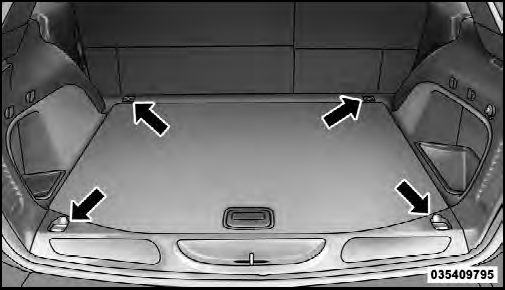
Cargo Tie-Down Hooks
WARNING!
• To help protect against personal injury, passengers
should not be seated in the rear cargo area. The
rear cargo space is intended for load carrying
purposes only, not for passengers, who should sit
in seats and use seat belts.
• Cargo tie-down hooks are not safe anchors for a child seat tether strap. In a sudden stop or accident, a hook could pull loose and allow the child seat to come loose. A child could be badly injured.
Use only the anchors provided for child seat tethers.
The weight and position of cargo and passengers can change the vehicle center of gravity and vehicle handling. To avoid loss of control resulting in personal injury, follow these guidelines for loading your vehicle:
• Do not carry loads which exceed the load limits described on the label attached to the left door or left door center pillar.
• Always place cargo evenly on the cargo floor. Put heavier objects as low and as far forward as possible.
• Place as much cargo as possible in front of the rear axle. Too much weight or improperly placed weight over or behind the rear axle can cause the rear of the vehicle to sway.
• Do not pile luggage or cargo higher than the top of the seatback. This could impair visibility or become a dangerous projectile in a sudden stop or accident.
See also:
Fuel System Cautions
CAUTION!
Follow these guidelines to maintain your vehicle’s performance:
• The use of leaded gasoline is prohibited by Federal law. Using leaded gasoline
can impair engine performance, and dam ...
Checking Oil Level
To assure proper engine lubrication, the engine oil must
be maintained at the correct level. Check the oil level at
regular intervals, such as every fuel stop. The best time to
check the engine ...
Adding Fluid
Fluid should be added only to fill hole until fluid begins
to run out of the hole. ...