


Preparations For Jacking
1. Park the vehicle on a firm level surface as far from the edge of the roadway as possible. Avoid icy or slippery areas.
WARNING!
Do not attempt to change a tire on the side of the
vehicle close to moving traffic, pull far enough off
the road to avoid being hit when operating the jack
or changing the wheel.
2. Turn on the Hazard Warning flasher.
3. Set the parking brake.
4. Place the shift lever into PARK (automatic transmission) or REVERSE (manual transmission).
5. Turn the ignition to the LOCK position.
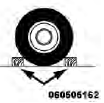
6. Block both the front and rear of the wheel diagonally opposite of the jacking position. For example, if changing the right front tire, block the left rear wheel.
NOTE: Passengers should not remain in the vehicle when the vehicle is being jacked.
See also:
Connect or Disconnect Link Between the Uconnect™ Phone and Mobile Phone
Your mobile phone can be paired with many different electronic devices, but can
only be actively connected with one electronic device at a time.
If you would like to connect or disconnect the Bluet ...
Daytime Running Lights — If Equipped
The headlights come on at a low intensity level when shifted into any position
other than PARK (auto transmission) or when the vehicle begins to move (manual transmission).
NOTE: The Daytime Runnin ...
Using The Panic Alarm
To turn the Panic Alarm feature on or off, press and hold
the PANIC button on the RKE transmitter for at least one
second and release. When the Panic Alarm is on, the
headlights turn on, the par ...