


Fuel Filler Cap (Gas Cap)
The gas cap is located behind the fuel filler door, on the driver’s side of the vehicle. If the gas cap is lost or damaged, be sure the replacement cap has been designed for use with this vehicle.
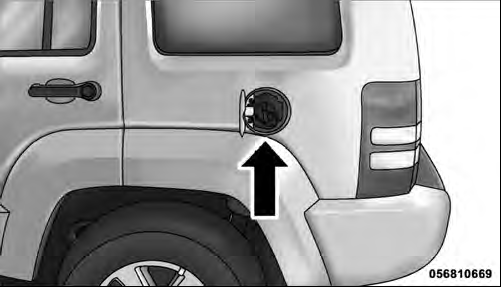
Fuel Filler Cap
CAUTION!
• Damage to the fuel system or emission control
system could result from using an improper fuel
cap (gas cap). A poorly fitting cap could let impurities
into the fuel system. Also, a poorly fitting
aftermarket cap can cause the “Malfunction Indicator
Light (MIL)” to illuminate, due to fuel vapors
escaping from the system.
• A poorly fitting gas cap may cause the MIL to turn on.
• To avoid fuel spillage and overfilling, do not “top off” the fuel tank after filling.
WARNING!
• Never have any smoking materials lit in or near
the vehicle when the gas cap is removed or the
tank is being filled.
• Never add fuel when the engine is running. This is in violation of most state and federal fire regulations and may cause the MIL to turn on.
• A fire may result if gasoline is pumped into a portable container that is inside of a vehicle. You could be burned. Always place gas containers on the ground while filling.
NOTE:
• When the fuel nozzle “clicks” or shuts off, the fuel
tank is full.
• Tighten the gas cap about one quarter turn until you hear one click. This is an indication that the cap is properly tightened.
• If the gas cap is not tightened properly, the MIL will come on. Be sure the gas cap is tightened every time the vehicle is refueled.
See also:
Chrysler Group LLC Customer Center
P.O. Box 21–8004
Auburn Hills, MI 48321–8004
Phone: (877) 426–5337 ...
Call Continuation
Call continuation is the progression of a phone call on the Uconnect™ Phone after
the vehicle ignition key has been switched to OFF. Call continuation functionality
available on the vehicle can ...
Mist Feature
Push downward on the windshield wiper/washer control
lever to activate a single wipe cycle to clear the
windshield of road mist or spray from a passing vehicle.
The wipers will continue to operat ...